
Cobb County Criminal Court Records
A criminal court record is the clerk's case file once a criminal matter is filed in court. In Cobb County, felony records are Superior Court records after indictment or other formal filing. Misdemeanor records are generally State Court records after accusation. Before that point, arrest-related material may still sit with Magistrate Court, law enforcement, the sheriff's custody system, the District Attorney, or the Solicitor General. That timing explains why a recent arrest may not yet appear in the State Court Clerk system.
The court record is broader than the arrest or booking entry. It can include the accusation or indictment, warrants, bond orders, arraignment entries, motions, hearing notices, plea records, verdict, disposition, sentence, probation terms, cost entries, and docket history. A reader focused only on the charge itself may need the Cobb arrest and charge page, while the full case record and final outcome belong in Cobb County criminal court records.
The manifest image from the Cobb County District Attorney page reflects the felony prosecution office tied to many Superior Court criminal files.
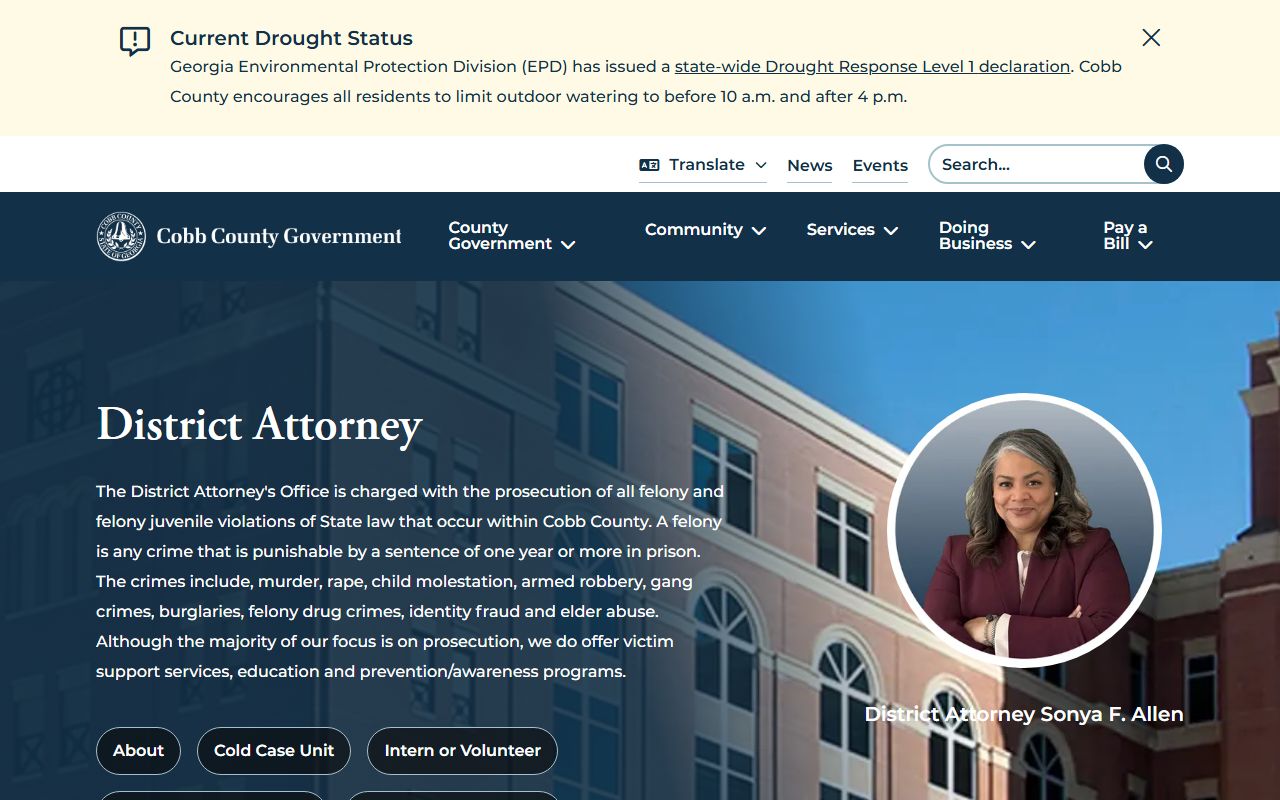
District Attorney materials matter because the office prosecutes felony and felony juvenile violations of state law occurring in Cobb County.
Search Cobb County Criminal Court Records
For Superior Court criminal records, start with the Clerk of Superior Court records-search hub. Superior Court is the route for felony case files, and the Clerk of Superior Court keeps Superior records. For misdemeanor records, use the Cobb State Court Records Search, which includes criminal and traffic cases filed from 4/26/1999 through the current year. The State Court portal supports searches by name and dates, case number, citation number, or tag number and requires reCAPTCHA.
- Decide whether the case is a felony, misdemeanor, preliminary Magistrate matter, or city ordinance case.
- Search Superior Court or State Court by defendant name, case number, filing date, citation number, or tag number when available.
- Use Magistrate Court search if the case is still at the warrant, first-appearance, minor criminal, or preliminary stage.
- Read the docket for charge filing, arraignment, motions, plea, disposition, sentence, and probation entries.
- Request certified copies from the clerk when the record is needed for court, licensing, immigration, or other formal use.
Statewide tools do not replace Cobb court records. The Georgia Department of Corrections offender query and Georgia.gov offender search are prison or supervision tools, not the county clerk's full court file. They may help after conviction or sentence, but they do not show every Cobb County criminal court record.
Cobb County Criminal Case Stages
A Cobb criminal case can start with a warrant, arrest, citation, or accusation process, but the court record takes shape as the case moves through hearings and filings. A felony arrest may begin with Magistrate first appearance or warrant activity, then move to Superior Court when indicted or accused. A misdemeanor arrest may remain in Magistrate early, then move to State Court after the Solicitor General files an accusation and the clerk dockets the case.
Case flow: Charges Filed › Arraignment › Pretrial / Motions › Plea or Trial › Disposition › Sentencing
| Stage | What Happens |
|---|---|
| Charges Filed | An accusation, indictment, warrant, or related filing starts the formal court record. |
| Arraignment | The charge is read and the defendant enters a plea such as guilty, not guilty, or nolo. |
| Pretrial / Motions | Attorneys file requests, raise legal issues, seek continuances, and prepare for plea or trial. |
| Plea or Trial | The case resolves by plea, bench trial, jury trial, dismissal, or another court action. |
| Disposition | The final outcome is entered for each charge or the whole case. |
| Sentencing | The court records jail, prison, probation, fines, costs, conditions, or other punishment after conviction or plea. |
What Cobb County Criminal Records Show
Cobb County criminal court records can show more than a charge list. Research Section 6 identifies common fields in Cobb portals and clerk files, including case number, court category, party names, filing date, docket entries, bond or fines, disposition, documents, and redactions. Criminal records may also include the accusation or indictment, warrants, bond orders, plea, sentence, probation, and docket entries. Online results may be limited, and official clerk records control if there is a discrepancy.
| Field | What It Shows |
|---|---|
| Case Number | The court's case identifier, such as State Court's example 24-A-12345 or Superior Court formats used by that clerk. |
| Defendant | The person charged in the criminal case, sometimes narrowed by date of birth year in State Court search. |
| Charges | The filed misdemeanor accusation, felony indictment, warrant-related charge, or amended charge information. |
| Bond Orders | Release conditions, bond amount, or bond-related docket entries when entered in the court record. |
| Plea | The defendant's formal response, such as guilty, not guilty, or nolo. |
| Motions and Orders | Requests filed by the parties and written rulings entered by the judge. |
| Disposition | The final outcome of the case or charge, including guilty, not guilty, dismissal, or other result. |
| Sentence | Jail, prison, probation, costs, fines, conditions, or other punishment after conviction or plea. |
The Cobb Second Chance Desk image in the manifest ties criminal court records to local restriction and sealing help.
That program is relevant when the record exists but a person may be eligible to limit public access.
Cobb County Criminal Charges vs Convictions
A charge is not the same thing as a conviction. Cobb County criminal court records can show charges that were later amended, reduced, dismissed, dropped, resolved by plea, or taken to trial. A conviction means the case or charge ended with a guilty plea, guilty verdict, or other conviction-level disposition. This distinction is important when reading a docket entry, because the charge line may remain visible even when the final result is different.
| Charge | Conviction | |
|---|---|---|
| Meaning | An allegation filed by the prosecutor or court process. | A final guilty result by plea or verdict. |
| Where It Appears | Accusation, indictment, warrant, or docket entry. | Disposition, sentencing entry, judgment, or final order. |
| Can Change | Yes, it may be amended, reduced, or dismissed. | It may later be appealed, corrected, restricted, or sealed when law allows. |
| How to Read It | Check the status and disposition before treating it as an outcome. | Read the sentence and probation terms for the practical result. |
For booking charges and the arrest-to-charges path, use the Cobb arrest and court charge records page. For the final court file, use the criminal case record.
Read Dispositions and Sentences
Disposition means the final outcome of a charge or case. In Cobb County criminal court records, the disposition may appear near plea, verdict, dismissal, sentence, or probation entries. A sentence is the punishment ordered after conviction or plea. Probation is community supervision under court terms. A continuance means a hearing or trial was postponed. A motion is a request asking a judge to order something, and an order is the judge's written ruling.
State Court materials also show why timing matters. The Clerk may not have arrest-case information until the Solicitor General files an accusation and the Clerk dockets the case. If a misdemeanor arrest happened recently but no accusation has been filed, the available record may still be with Magistrate Court, the Solicitor General, law enforcement, or the sheriff's records channel rather than the State Court criminal docket.
Note: Read the disposition and sentence before treating a filed charge as the final Cobb County criminal court result.
Sealed Cobb County Criminal Records
Georgia commonly uses the term record restriction rather than expungement. The GBI explains that O.C.G.A. 35-3-37 governs criminal-history review, correction, and restriction. For arrests after July 1, 2013, the person contacts the prosecutor rather than using a GBI application process. For earlier arrests, the person may need to apply at the arresting agency. Court sealing is related but distinct because it limits public access to the court record.
| Sealed Court Record | Restricted Criminal History | |
|---|---|---|
| Main effect | Limits public view of a court record. | Limits criminal-history access for non-criminal-justice purposes. |
| Common source | Court order or court process. | O.C.G.A. 35-3-37 and prosecutor or agency approval where required. |
| Record status | The court file may still exist with limited access. | The history record may be restricted from ordinary public use. |
| Cobb help point | Clerk or court tied to the case. | Cobb Second Chance Desk for eligible review and forms. |
The manifest image from the GBI record restriction page shows the state-level restriction source.
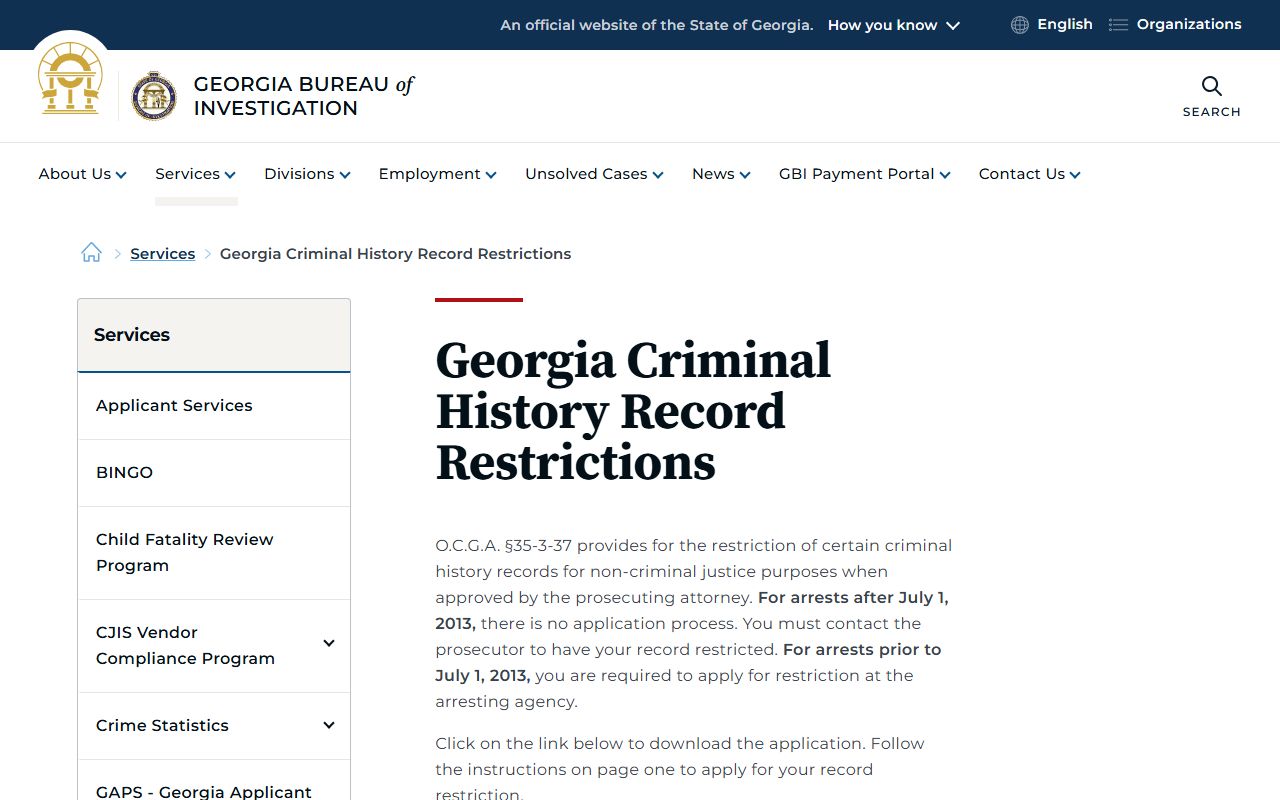
That state process complements Cobb court records, but it does not rewrite the court docket by itself.
The manifest image from the O.C.G.A. 35-3-37 statute page documents the statute cited in the research.
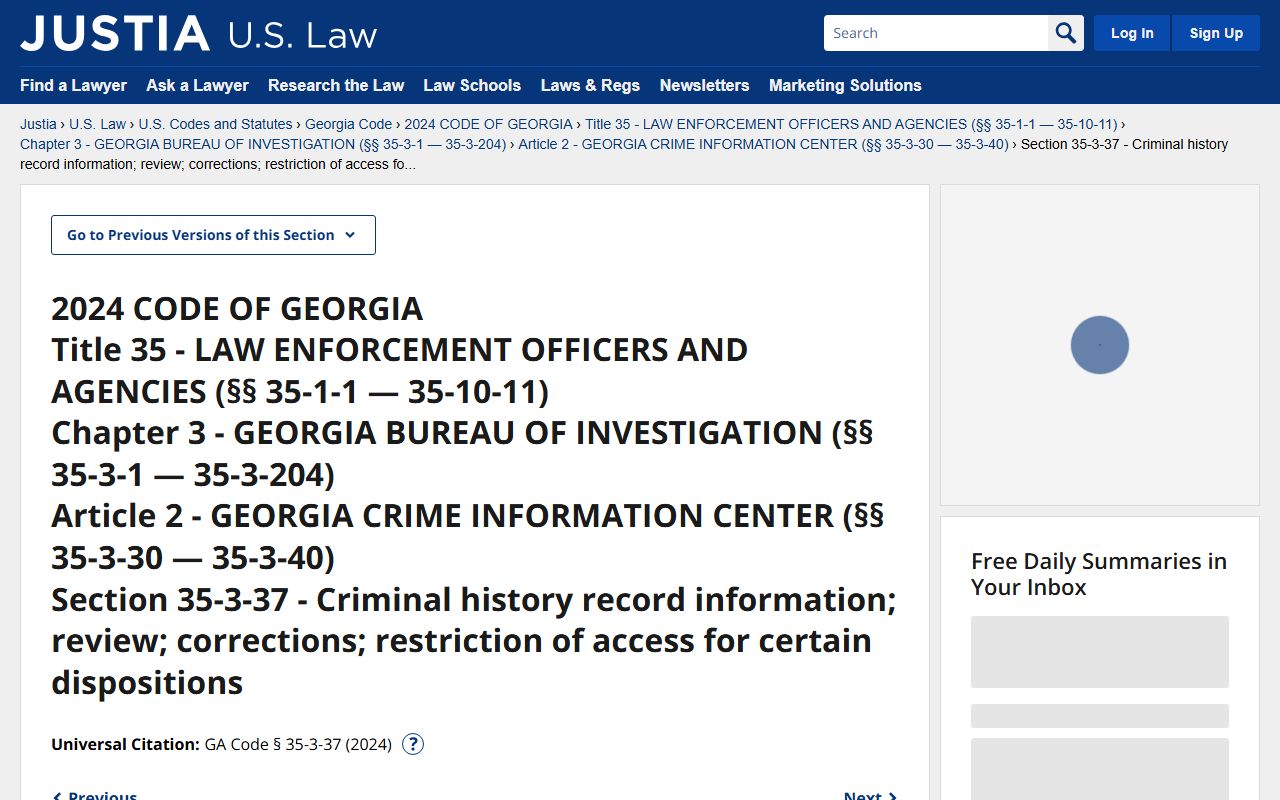
Use the statute and the prosecutor or agency route identified by Georgia law when evaluating restriction eligibility.
Public Access to Cobb Criminal Records
Georgia open-records law and court-record rules support public access unless a record is confidential, sealed, restricted, or exempt. O.C.G.A. 50-18-70 expresses the state's policy favoring public access, and O.C.G.A. 50-18-72 lists categories that need not be disclosed. Uniform Superior Court Rule 21 treats court records as public unless limited by law or a court procedure.
Restricted records include juvenile cases, sealed criminal records, adoption records, mental-health proceedings, medical information, minor identities, financial account data, and Social Security numbers. Juvenile criminal-related records are not the same as adult criminal court records. Probate mental-health records are also not ordinary public criminal lookup material.
Cobb Criminal Records and Offender Tools
State offender tools can help after a Cobb criminal case has moved beyond the county clerk file, but they answer a different question. The Georgia Department of Corrections Offender Query is used for state prison or supervision records. The Georgia.gov offender-search overview directs users to the offender-search path. These tools do not show every arrest, every charge, or every Cobb County criminal court docket entry.
The manifest image from the Georgia Department of Corrections offender query shows a statewide post-conviction lookup source.
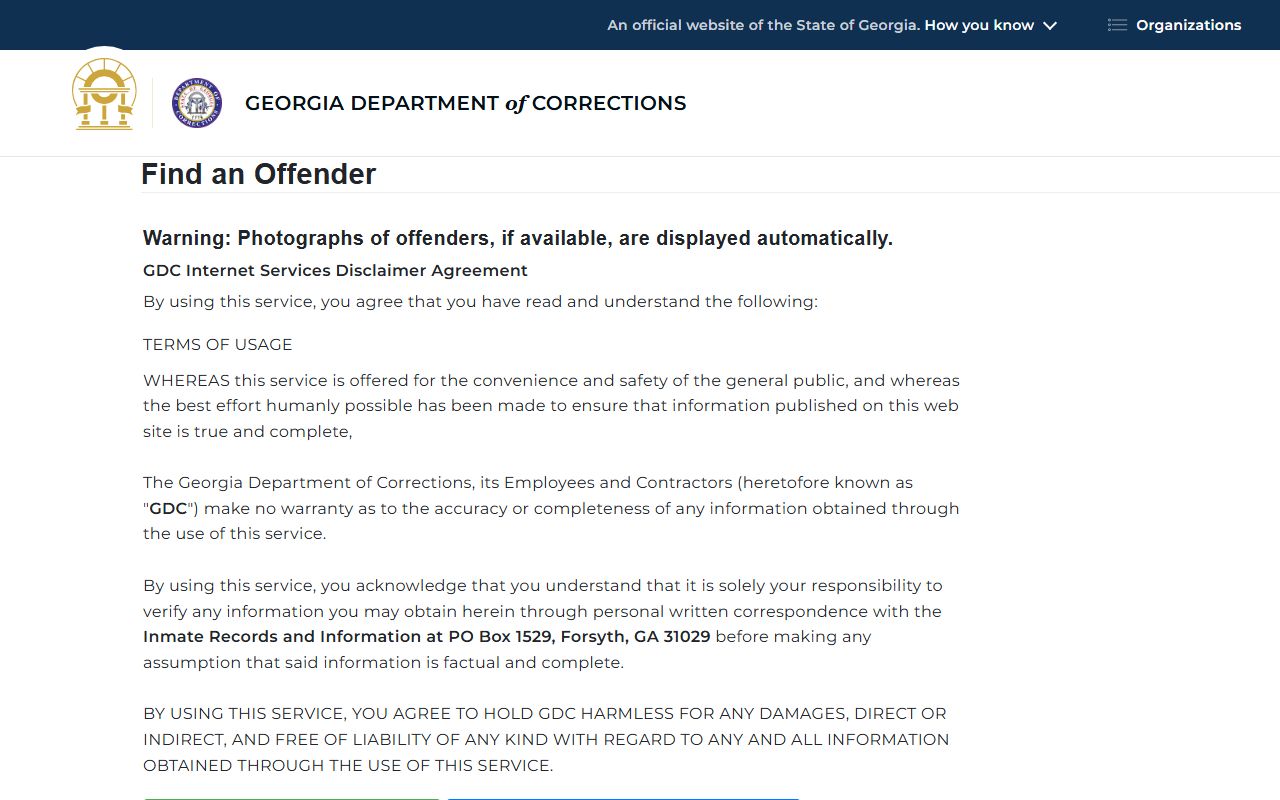
Use it as a supplement to Cobb County criminal court records, not as the primary court case file.
The manifest image from the Georgia.gov offender-search overview shows the public state overview path.
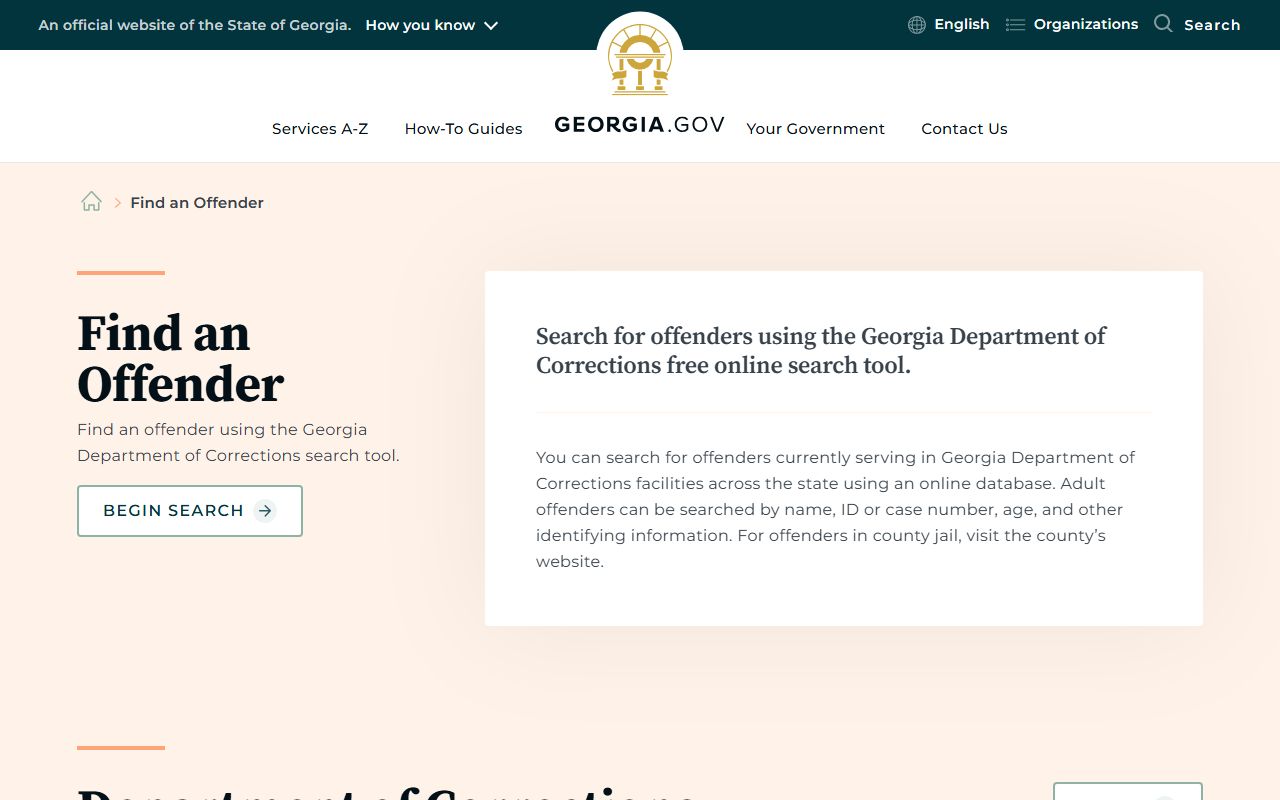
A person can have a county court record without appearing in a state prison offender search.
Restricted Cobb Criminal Records
Some Cobb County criminal court records are restricted because of age, record type, court order, or statute. Juvenile records are governed by Title 15, Chapter 11, Article 9, and access may be limited to the child, parent or guardian, counsel, agencies, or a court-authorized person. Adoption-related files are sealed. Mental-health matters handled through Probate Court are not ordinary criminal public records. Personally identifying data is also subject to redaction.
Cobb's local restriction support is unusually specific. The Second Chance Desk is housed at the Circuit Defender's Office at 10 East Park Square and is a partnership involving Georgia Justice Project, the Circuit Defender, the District Attorney, the Solicitor General, and the Cobb Judicial Circuit. It helps people review Cobb criminal history, receive free consultation, and fill out restriction forms for eligible offenses. The research lists Friday hours from 9 a.m. to noon, appointment priority, appointment releases on the third Friday of each month at 9 a.m., 404-834-8604, and secondchancecobb@gjp.org.