
Cobb County Superior Court
Cobb Superior Court has general jurisdiction over civil and criminal law actions. The research map identifies it as the broad trial court for felonies, divorce, title-to-land cases, equity, and general civil/criminal matters. It also has concurrent jurisdiction with State Court for misdemeanors and several civil case types. The courthouse address in the research is 70 Haynes Street in Marietta.
Cobb does not use a single district court as its main county trial court. Georgia's trial system includes Superior, State, Juvenile, Probate, Magistrate, and Municipal courts, with the Georgia Court of Appeals and Supreme Court of Georgia above them. For Cobb County Superior Court records, the Clerk of Superior Court is the core record office.
| Court or Office | Main Role | Address | Phone |
|---|---|---|---|
| Superior Court | Felonies, divorce, land title, broad civil/criminal cases | 70 Haynes Street, Marietta, GA 30090 | (770) 528-1800 |
| Clerk of Superior Court | Superior records, divorce decrees, real estate records | 70 Haynes Street, Marietta, GA 30090 | (770) 528-1300 |
| Superior Court Real Estate Division | Real estate records | 10 East Park Square, Building C, Marietta, GA 30090 | (770) 528-1360 |
| District Attorney | Felony and felony juvenile prosecution | 70 Haynes Street, Marietta, GA 30090 | (770) 528-3080 |
Cobb County Trial Court Roles
The main trial-court question in Cobb County is not "district court or county court." It is which Georgia trial-level court has the file. A felony arrest may begin in Magistrate Court for first appearance or warrant activity, then move to Superior Court after indictment or accusation. A misdemeanor arrest may remain with Magistrate early and then move to State Court after the Solicitor General files. A city traffic ticket stays with the city court unless a jury demand sends it to State Court.
That routing also controls clerk access. The Clerk of Superior Court maintains Superior records, divorce decrees, and real estate records. The Clerk of State Court maintains State Court records and collects fines and fees in those cases. Probate and Magistrate maintain separate access channels. A complete Cobb County court search may require more than one of these offices.
| Case Type | Primary Cobb Court | Record Office |
|---|---|---|
| Felony criminal case | Superior Court | Clerk of Superior Court |
| Divorce | Superior Court | Clerk of Superior Court |
| State-law traffic in unincorporated Cobb | State Court | Clerk of State Court |
| Small claims or dispossessory | Magistrate Court | Magistrate Court |
| Estates, guardianships, marriage licenses | Probate Court | Probate Court |
| City traffic or ordinance case | Municipal Court | Issuing city court |
The best internal path for full case access is the broader Cobb County court records search page, while clerk-specific copy issues belong with the Cobb County Clerk of Superior Court page.
Cobb County Case Flow
Cobb's case flow depends on the type of case. Criminal matters can start with law enforcement, Magistrate Court warrants, or first appearance. Felonies then move into Superior Court after the prosecutor files the required charging document. Misdemeanors normally move into State Court after accusation by the Solicitor General. Civil, divorce, and land-title matters begin with filings in the court that has jurisdiction.
Felony flow: Arrest or warrant › Magistrate first appearance › indictment or accusation › Superior Court arraignment › motions and hearings › plea or trial › sentence › appeal.
Divorce flow: complaint filed › service › answer or default › temporary orders or mediation › final hearing or agreement › decree held by Superior Court Clerk.
Traffic flow: citation › State Court or municipal court › payment, court appearance, or contest › disposition › possible DDS reporting.
Superior Court vs Lower Courts
Superior Court is the broad court, but it does not hold every local record. State Court, Magistrate Court, Probate Court, Juvenile Court, and Municipal Court each have their own records and public channels. This split is why a Cobb County Superior Court search may miss a traffic, probate, small claim, or municipal ordinance case.
Superior Court's most important local distinction is subject matter. Felonies, divorce, land-title disputes, equity actions, and broad civil or criminal filings point to Superior Court. State Court is still important for misdemeanors, traffic, and civil lawsuits not reserved to Superior Court. Magistrate Court is often the early criminal or warrant contact point, but it is not the final court for a Superior felony trial.
| Superior Court | State Court | Magistrate Court | |
|---|---|---|---|
| Main civil role | Broad civil, equity, land title, divorce | Civil lawsuits not reserved to Superior Court | Small claims up to $15,000 and dispossessory cases |
| Criminal role | Felony trials and major criminal filings | Misdemeanors and traffic cases after filing | Warrants, first appearances, preliminary matters |
| Record office | Clerk of Superior Court | Clerk of State Court | Magistrate Court records search or court clerk |
| Public search limits | Superior records and real estate use clerk channels | Search covers listed civil, traffic, and misdemeanor date ranges | Search results may need narrowing and official records control |
Federal Court for Cobb County
Cobb County is also within the federal Northern District of Georgia. Federal court is different from Cobb County Superior Court. It handles federal civil and criminal cases, bankruptcy through a separate bankruptcy court, and federal filings available through PACER/CM/ECF. Most Cobb County trial-court matters still remain in the Georgia state court system, but a federal charge, civil-rights case, bankruptcy case, or federal agency case may require the federal path.
The U.S. District Court for the Northern District of Georgia is one of the manifest sources assigned to this page.
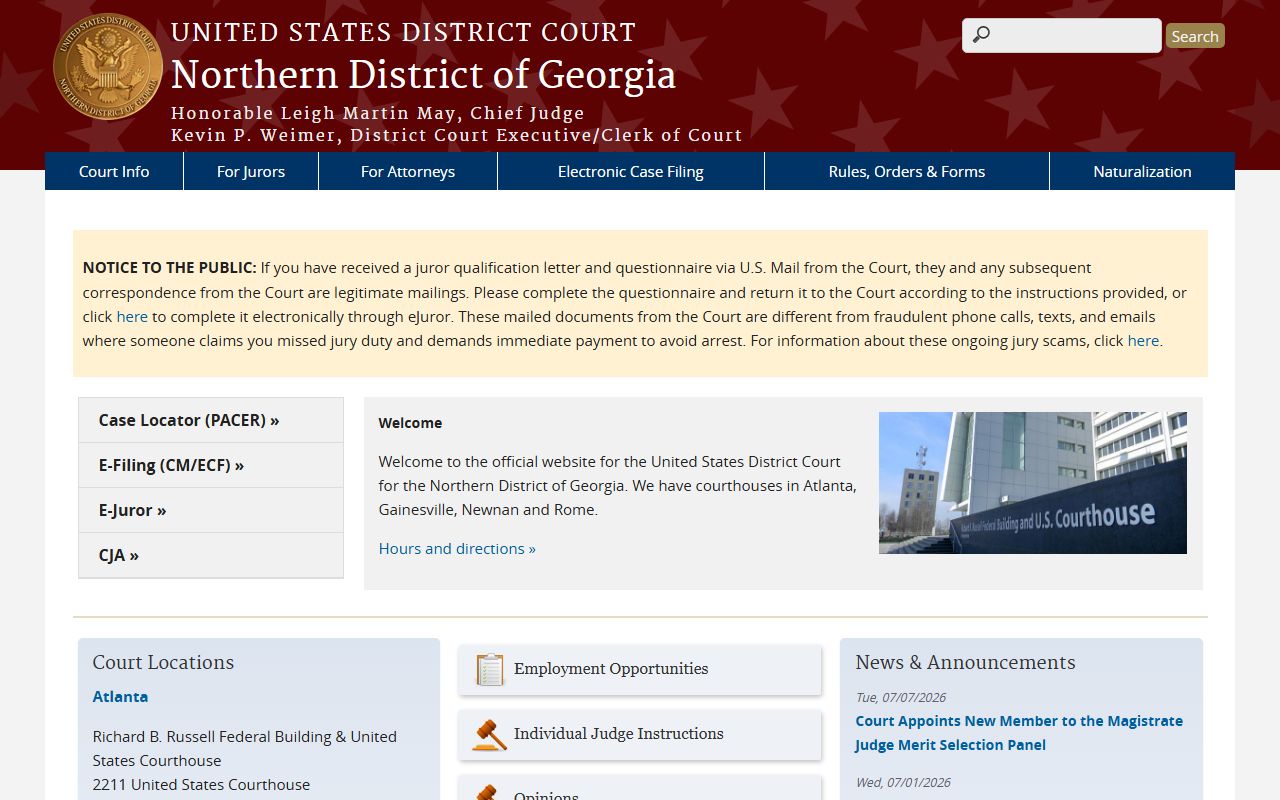
This federal source is included for jurisdiction context, not because it replaces Cobb County Superior Court.
The Northern District court locations page lists the Atlanta federal courthouse used for the district.
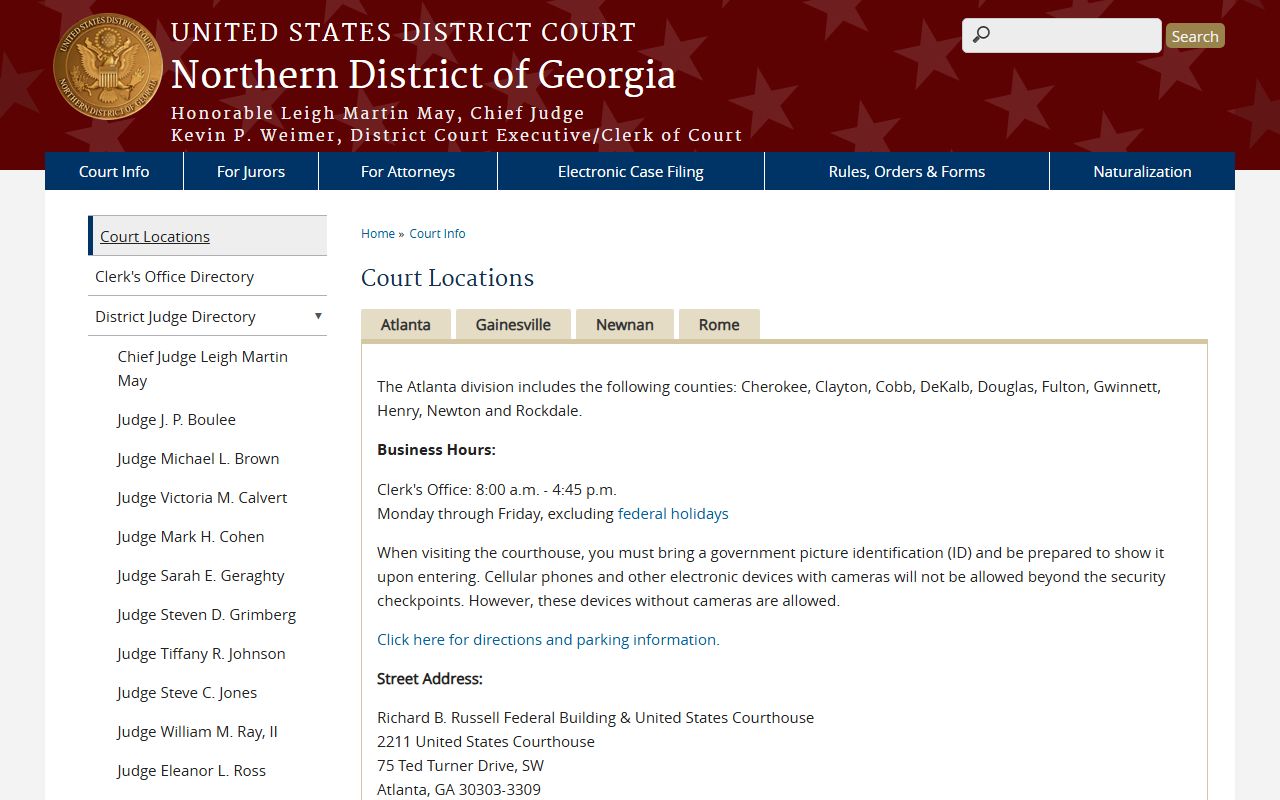
For Cobb residents, federal courthouse access is centered in Atlanta, while county trial records remain in Marietta.
Federal Case Records Near Cobb
Federal case records use PACER rather than the Cobb clerk portals. The research identifies the Richard B. Russell Federal Building and United States Courthouse in Atlanta as the relevant federal courthouse for Cobb residents. Northern District clerk office hours and federal contact details are separate from Cobb County's Superior, State, Probate, Magistrate, and Municipal court offices.
The PACER CM/ECF lookup for the Northern District of Georgia is a manifest source for federal record access.
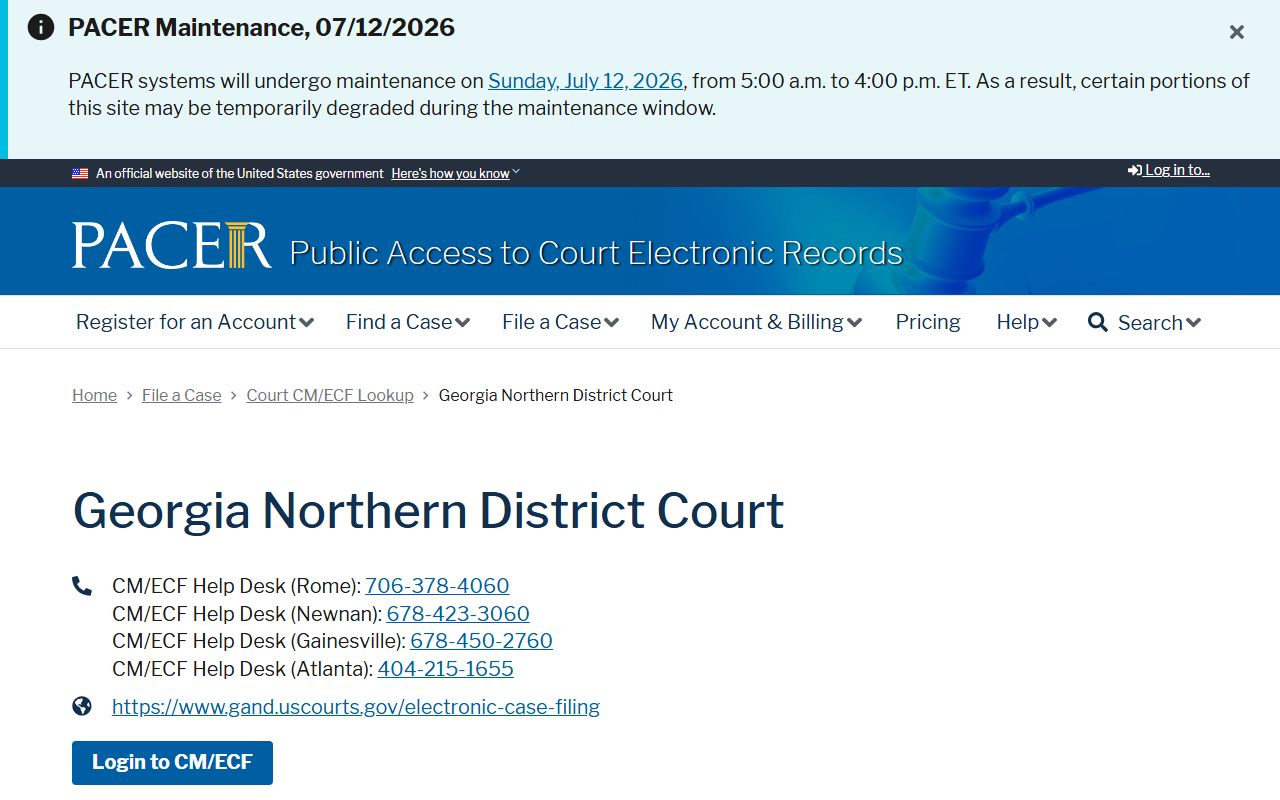
PACER is the federal filing system, while Cobb County Superior Court records are requested through the local Superior Court Clerk.
The U.S. Bankruptcy Court for the Northern District of Georgia is another assigned federal source.
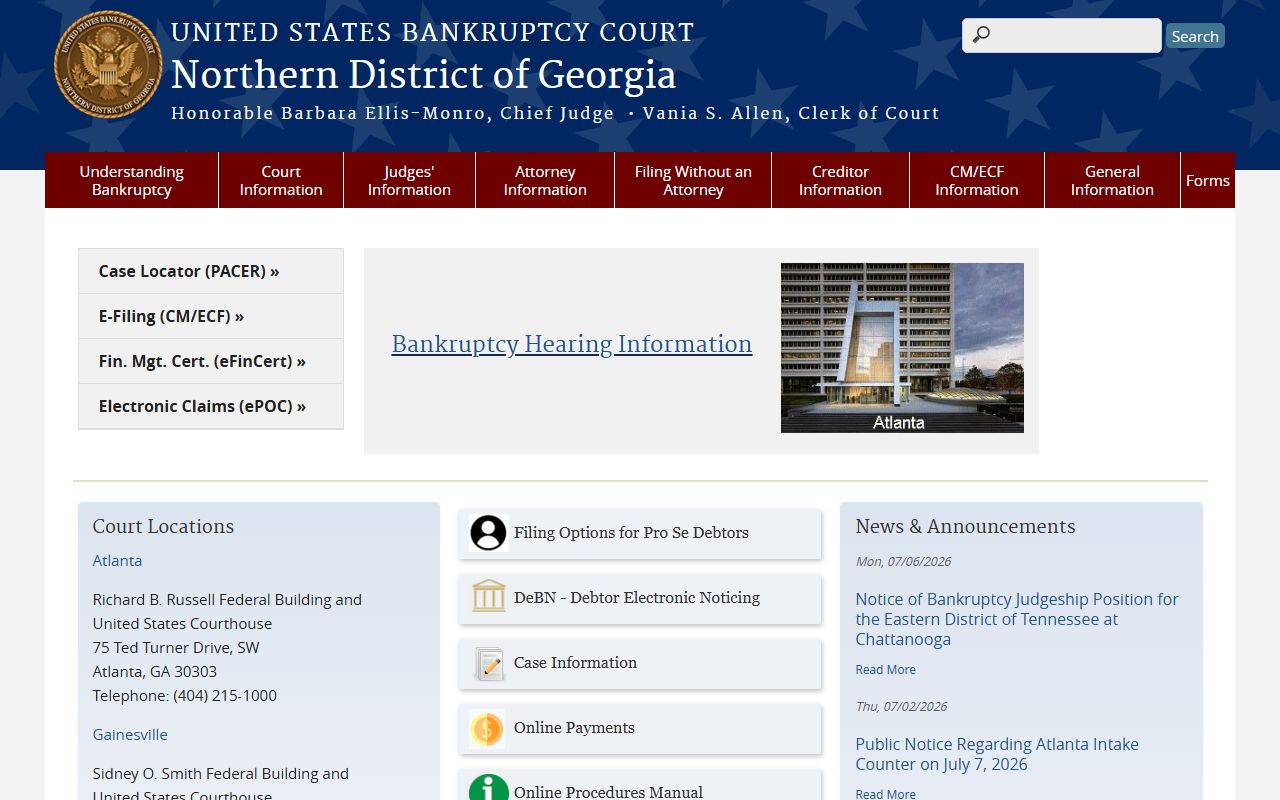
Bankruptcy cases are federal bankruptcy records, not Cobb Probate Court estate files or Superior Court civil cases.
Cobb Superior Court Prosecution
The District Attorney's Office is part of the Cobb Superior Court ecosystem for felony prosecution. The research lists District Attorney Sonya F. Allen and states that the office prosecutes all felony and felony juvenile violations of state law occurring in Cobb County. State Court misdemeanors are prosecuted separately by the Solicitor General.
The U.S. Attorney for the Northern District of Georgia is included in the manifest as federal context.
Federal prosecutors handle federal cases, while Cobb's District Attorney handles state felony prosecution in Superior Court.
Appeals from Georgia trial courts may go to the Georgia Court of Appeals or the Supreme Court of Georgia depending on case type. A trial-court docket entry may show a notice of appeal, but the appellate file is maintained in the appellate court system, not as a new Superior Court trial file.
Cobb County Court Campus
Cobb's court campus is clustered around Marietta Square. Superior Court, Superior Court Administration, the Superior Court Clerk Court Division, Superior Court Judges, District Attorney, and jury assembly are tied to the 70 Haynes Street area. State Court and the State Court Clerk are at 12 East Park Square. Probate, Magistrate, and Juvenile functions are at 32 Waddell Street. The real estate division is at 10 East Park Square, Building C.
Jury information in the research names Jury Lot A, Jury Lot B, and Parking Deck P for jurors, with validation tied to juror parking. Visitors should verify parking rules before a court visit because the validation language is specific to jury service. Security screening is expected for jurors and courthouse users.
Access rule: Uniform Superior Court Rule 21 says court records are public unless access is limited by law or a court's limited-access procedure.
Cobb Superior Court also has accountability courts at 10 East Park Square, Suite 200. The research lists Drug Treatment Court, Mental Health Court, Veterans Treatment Court, and Parental Accountability Court. Those programs do not replace the ordinary Superior Court docket, but they show how some criminal or family-related cases may move through a specialized supervision path after court screening.
The research also notes a 2026 recovery-program facility for participants in Veterans, Mental Health, DUI, Drug Treatment, and Family Treatment Courts. That detail is useful because a Superior Court case may have docket entries tied to treatment, review hearings, compliance, or program participation rather than only traditional trial settings.